

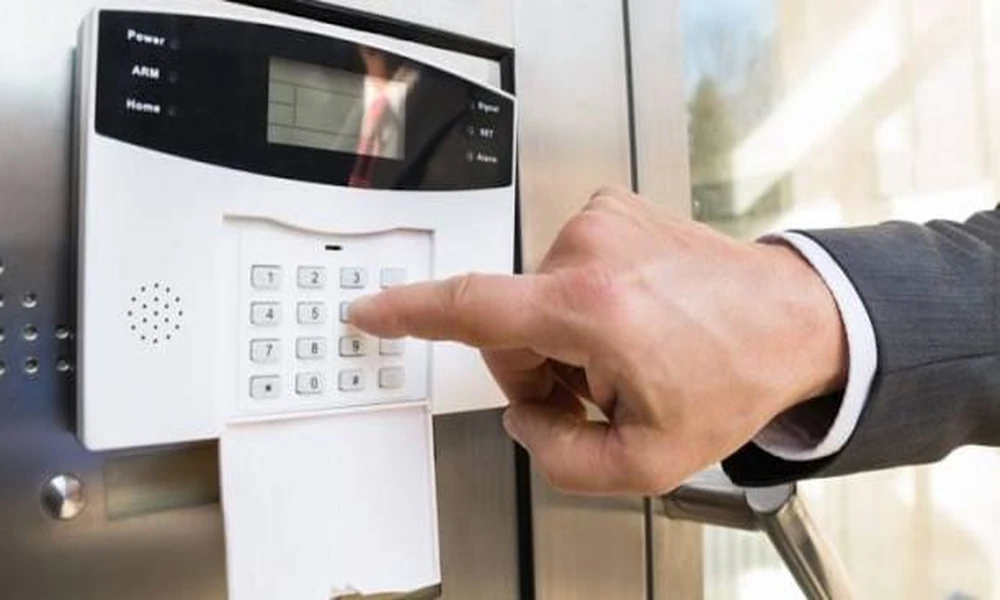
The honest answer to “how much does a home security system cost” is a range wide enough to be almost useless on its own. Forbes Home’s 2026 analysis of 16 home security companies put the average system cost at $600, with a low end around $60 for a single camera and a high end around $3,000 for a fully wired, professionally installed setup.
Equipment, Piece by Piece
Forbes Home’s component pricing found door and window alarms running $20 to $40 each, motion sensors $30 to $85, and cameras anywhere from $45 for a basic wireless model to $300 for a premium indoor or outdoor unit. A doorbell camera alone can run $60 to $190 depending on features.
None of those numbers include the hub, the keypad, or the sensors needed to cover more than a single entry point.
DIY at One End, Professional Install at the Other
Self-installed systems typically carry no installation fee because the homeowner installs everything themselves. Professional installation averages $150, and it can run as high as $299.
A self-installed system asks the homeowner to place every sensor and camera correctly on their own. With a professionally installed system, the homeowner pays for someone trained to lay out and place equipment.
Monitoring Is the Cost That Keeps Going
Equipment costs have an end point, whether a homeowner pays upfront or spreads them over a financing term. Monitoring doesn’t. It runs every month for as long as the service continues. Two systems with similar sticker prices can end up far apart over time.
Self-monitoring skips the monitoring center, and the homeowner is responsible for responding to all alarms. Paid self-monitoring plans, which commonly add features such as expanded video storage, run under $20 a month in most cases. Professional monitoring plans among the companies Forbes Home reviewed ranged from under $10 to nearly $100 a month.
A basic monitoring tier confirms an alarm triggered and calls the homeowner. A premium tier can include direct dispatch coordination with emergency responders.
The Fees Nobody Quotes You
Most companies don’t charge an activation fee. Among those that do, Forbes Home found rates from $25 to $99, averaging around $76. Some jurisdictions require an alarm permit for systems that automatically contact emergency services, typically $25 to $50 a year, with fines running well past that if a homeowner skips it and gets caught.
Homeowners insurance discounts can offset some of this, though rarely all of it. Discounts for a monitored system range from about 2% for a basic setup to as much as 20% for a professionally monitored one.
Why the Range Is So Wide
SafeHome.org’s 2026 Home Security Market Report found that 61% of U.S. households now own at least one security camera, up from 52% in 2024, and DIY installation has overtaken professional installation for the first time: 49% of alarm system users set up their own equipment, compared with 42% who hired a professional.
At the high end, financing is its own decision. Spreading equipment costs over a fixed financing term turns a $1,500 or $2,000 upfront number into a manageable monthly payment. That helps at the professionally installed end of the range. A $60 camera doesn’t need it.
The Sticker Price Is Only the First Layer
A system’s true cost is its equipment, installation, and monitoring added together. The sticker price covers only the first.
Costs don’t stop once the system is up. Some providers tie service to a contract, with a fee if the homeowner ends it early.
Equipment and installation are a one-time cost, paid upfront or over a financing term. Monitoring is billed every month for as long as the service runs, so the longer a system stays in place, the larger the share of the total it accounts for.
